School Running Clubs: Benefits, Research, and FAQ
What Is a School Running Club?
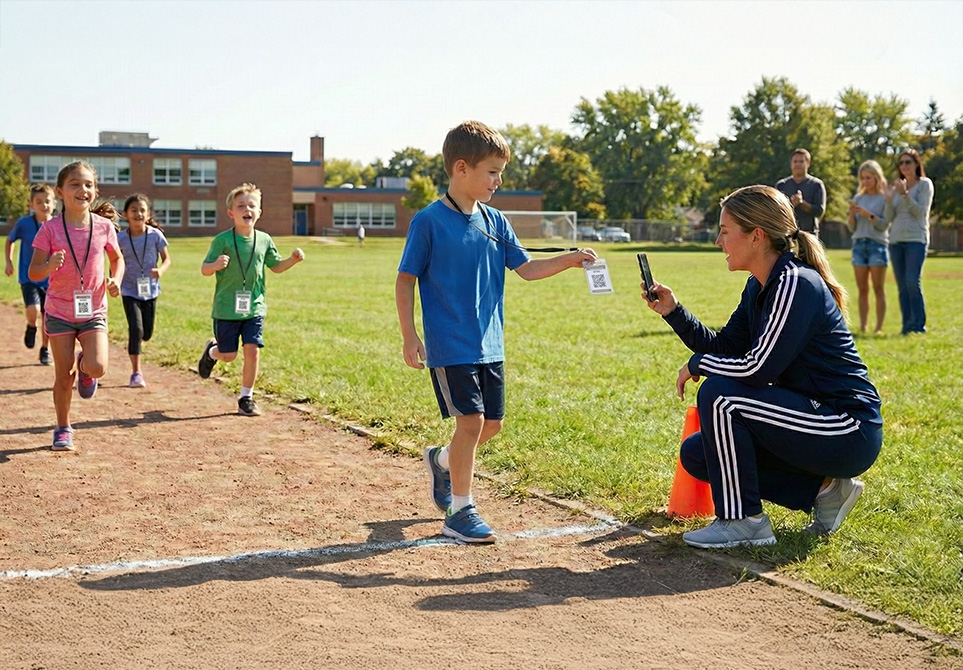
A school running club is a regular structured opportunity for students to walk, jog, or run together. Walking and running clubs can take place anytime, with most schools organizing their walks and runs before school, during lunch, or after school. Clubs typically track participation, distance, and/or run time and celebrate progress toward personal and group goals. Anyone can organize and lead a running club, including teachers, other staff members, and even parent volunteers.
Running clubs are inclusive, flexible, and designed to fit into busy school schedules with minimal disruption.
When combined with tools like Student Lap Tracker, tracking laps and mileage becomes simple and motivating.
Why Start a School Running Club?
Incorporating a run club at your school offers numerous potential benefits that support your overall institutional goals for student development.
✓ Regular aerobic activity strengthens cardiovascular and respiratory function, improves metabolic health, supports healthy body composition, and promotes durable exercise habits that persist into adulthood.
✓ Consistent participation in moderate-to-vigorous physical activity during childhood is associated with lower cardiometabolic risk and improved physiological efficiency.
✓ Current guidelines recommend that children and adolescents accumulate at least 60 minutes of moderate to vigorous physical activity daily; structured options such as running clubs make meeting this threshold more practical and repeatable.
✓ Participation in regular physical activity, including running clubs and organized after-school sports, is consistently linked to higher cardiovascular fitness, greater muscular strength, and better overall physical health compared with less active peers.
✓ Youth who engage in running clubs and other activities demonstrate superior fitness markers and physical performance, reflecting the cumulative benefits of sustained movement during key developmental years.
School Running Clubs Support Academic Success and Cognitive Function
✓ Students who engage in regular physical activity demonstrate higher attention and on-task behavior during lessons – they do better in the classroom.
✓ Studies find positive associations between physical activity and academic performance; activity doesn’t detract from learning time and may enhance executive functions like memory and task switching.
✓ Regular movement increases blood flow and oxygen to the brain, supporting cognitive processes critical for learning.
✓ Running clubs are an easy and effective way to bring these benefits into your school with minimal effort.
School Running Clubs Support Social and Emotional Health
✓ Regular group physical activity in school-aged children is associated with better social and emotional outcomes.
✓ Research shows that children who participate in physical activity with peers demonstrate stronger social-emotional skills than those who are less active or participate alone.
✓ Students engaged in group running or sports report greater feelings of connection and peer support, which are linked to improved emotional regulation and more positive interactions with classmates.
✓ Students involved in structured group activities show greater confidence and healthier peer relationships compared with less active peers. These benefits reflect the value of regular, organized opportunities for collaboration and shared effort.

Running Clubs are Simple to Start and Easy to Manage.
Unlike traditional sports that often require expensive equipment and specialized facilities, running clubs offer a cost-effective solution that is immediately accessible to students. By removing high barriers to entry, schools can create an inclusive environment where walkers, joggers, and sprinters of all athletic abilities participate side-by-side. This streamlined approach allows educators to focus on improving student health without the logistical headaches of complicated curriculum planning.
Turn Any Space into a Track
Whether it’s a rainy day in the gym or a sunny day on the soccer field, running clubs adapt to your available facilities. No renovation budget required.
Fits Your Schedule
Maximize student activity minutes during the times that work for you! Before school, during lunch, or after the final bell. Running clubs are super flexible.
One-Person Operation
You don’t need a massive coaching staff to run a successful club. A single coordinator can easily manage the program with the help of programs like Student Lap Tracker.
No More Manual Counting
Tools like Student Lap Tracker eliminate the hassle of manual data entry. Simply scan student IDs and let the software handle the rest. No counting, no math.
Data Drives Motivation
Fuel motivation with timely data. Students watching their mileage climb week after week are inspired and motivated to run that extra lap.
Running clubs are a research-backed way to boost student health, focus, and social well-being with minimal overhead. By pairing a simple plan with tools like Student Lap Tracker, your school can deliver a high-impact fitness program that is as easy to manage as it is to start.
FAQ: Common Questions About School Running Clubs
Q: What are the primary benefits of starting a school running club?
A: School running clubs offer a “triple threat” of benefits: physical, academic, and social-emotional. Physically, they combat sedentary lifestyles and obesity by meeting CDC daily activity recommendations. Academically, aerobic exercise triggers the release of BDNF (Brain-Derived Neurotrophic Factor), which improves memory, focus, and cognitive function. Socially, clubs provide an inclusive environment where students of all athletic abilities can set personal goals and build community.
Q: Do running clubs improve student test scores and academic performance?
A: Research indicates a strong correlation between aerobic fitness and academic achievement. Physical activity before school or during lunch acts as a “brain wake-up,” increasing blood flow to the hippocampus. This leads to better concentration in the classroom, reduced behavioral disruptions, and improved test scores, particularly in reading and mathematics.
Q: How do running clubs support Social Emotional Learning (SEL)?
A: Running clubs are inherently goal-oriented. By setting distance goals (e.g., running a marathon over a semester) and tracking progress, students develop self-management and self-efficacy skills. The non-competitive nature of most elementary and middle school run clubs fosters a sense of belonging and reduces anxiety, providing a healthy outlet for stress.
Q: What facilities are required to start a running club at an elementary school?
A: One of the main advantages of running clubs is that they require no specialized facilities. You do not need a regulation track. A simple loop around a playground, a grassy field, or even the perimeter of a gym is sufficient. If you have 100 yards of space, you have enough room for a successful program.
Q: When is the best time to schedule a running club?
A: Running clubs are highly flexible. Before School (Morning Mile): Great for waking up the brain and ensuring students arrive at class ready to learn. Lunch Recess: Maximizes existing free time and provides a structured activity for high-energy students. After School: Allows for longer sessions and greater community/parent involvement. Schedule your running club for the time that works best for your students, climate and staff availability.
Q: How much staff is needed to supervise a running club?
A: Unlike team sports that require coaches for small groups, running clubs scale easily. A single faculty coordinator can manage a club of 100+ students if they have the right workflow. By using student leaders or a few parent volunteers to manage safety at corners, the staffing burden is minimal compared to other extracurriculars.
Q: How do schools track student laps and mileage efficiently?
A: While some schools still use popsicle sticks or manual tally marks, these methods are labor-intensive and prone to error. The industry standard has shifted to digital scanning. Programs like Student Lap Tracker use simple QR codes or barcodes on student ID cards. As students run past a checkpoint, a volunteer scans their card using a phone or tablet, instantly logging the data.
Q: Why should we use an app instead of paper tracking?
A: Digital tracking removes the administrative bottleneck. It provides:
- Rapid Feedback Loop: Transform today’s laps into tomorrow’s goals. Generate progress reports immediately after the run, giving students instant gratification and something to aim for next time.
- Data Integrity: accurate mileage counts without “lost” popsicle sticks or tally errors.
- Reporting: Teachers can generate instant reports on participation and total distance run by class or grade level.
- Time Savings: Coordinators save hours of data entry time every week.
Q: How do I handle large groups of students running at once?
A: Flow management is key. Establish a one-way running loop with one or more designated “scanning zones (finish lines).” Using a solution like Student Lap Tracker allows you to process a student in a fraction of a second. This prevents bottlenecks and keeps the students moving, even with groups of 200+ runners.
Q: How do you keep students motivated to run all year?
A: Gamification is essential. Students are motivated by seeing their progress visually.
Some examples include:
- Mileage Tokens: Award small “toe tokens” or charms or other prizes for every 5 or 10 miles run.
- Leaderboards: Display class-vs-class competitions (e.g., “Which class can run across the state first?”)
- Awards and Certificates: Print automated certificates for distance, lap and participation awards from your tracking software to reward hard work.
Q: Is a running club inclusive for students with disabilities or low athletic ability?
A: Unlike competitive track teams, running clubs are “self-paced.” Students can walk, jog, or run. The goal is personal improvement and movement, not speed. This makes it one of the most accessible physical activities for students with diverse physical and cognitive abilities.
Q: How much does it cost to start a school running club?
A: Running clubs are among the most cost-effective programs a school can offer. The primary costs are administrative (tracking software) and incentives (tokens/awards). There is no expensive equipment (pads, helmets, bats) required. Get a custom quote for Student Lap Tracker in just a few clicks.
Q: How can schools fund a running club?
A: Most schools fund their clubs through:
- PTA/PTO Budgets – Parent organizations love funding health and wellness initiatives.
- Local Sponsorship – Local businesses often sponsor t-shirts or the cost of the tracking software in exchange for a logo on the club shirt.
- Grants – Look for “Safe Routes to School” grants or health/wellness grants from local hospital systems. Some software providers offer special pricing for Title I and budget-constrained schools.
Q: What are the safety considerations for a running club?
A: Safety protocols are straightforward: (1) Surface check – Ensure the running path is free of holes or tripping hazards (2) Hydration – Ensure water is available, especially on hot days (3) Supervision – Ensure adults are positioned at corners or “blind spots” on the course (4) Tracking – Digital tracking ensures you know exactly who is participating on any given day.
Q: What features should schools look for in running club software?
A: Schools should prioritize software that is privacy-compliant (COPPA/FERPA), uses QR code scanning for speed, and offers per-school pricing rather than per-student fees. Programs like Student Lap Tracker are specifically designed to meet these educational standards while remaining affordable for public schools.